A company is easy to describe after it begins to work. You can count projects, list services, show clients, and talk about the team. The more honest story lives before those results—when there is no proof, no momentum, and no guarantee that the market will care about what you are trying to build.
DrepoTech began in 2024 with more confidence than evidence. I was still a student, working with the company’s first collaborators, and the original idea was simple: take the skills we had developed and test them in the real market. It may have looked overconfident from the outside. From the inside, it felt necessary.
For 43 days, we had a company in our minds and in our work—but not yet in the eyes of a client.
The story began long before the first line of code
I was born and raised in Tetovo, North Macedonia. Business was not an abstract subject in our home. From around the age of seven, I spent time beside my father as he worked across different businesses. I did not have the language for entrepreneurship then, but I was already learning its basic truths: people remember how you treat them, responsibility is visible, and every result has unglamorous work behind it.
Those early experiences shaped me more than I understood at the time. I was interested in technology, but I never imagined a future in which being a good developer was the only destination. I wanted to understand how things were built, how people made decisions, and how an idea became useful enough that someone would trust it.
Three months in Germany clarified the future
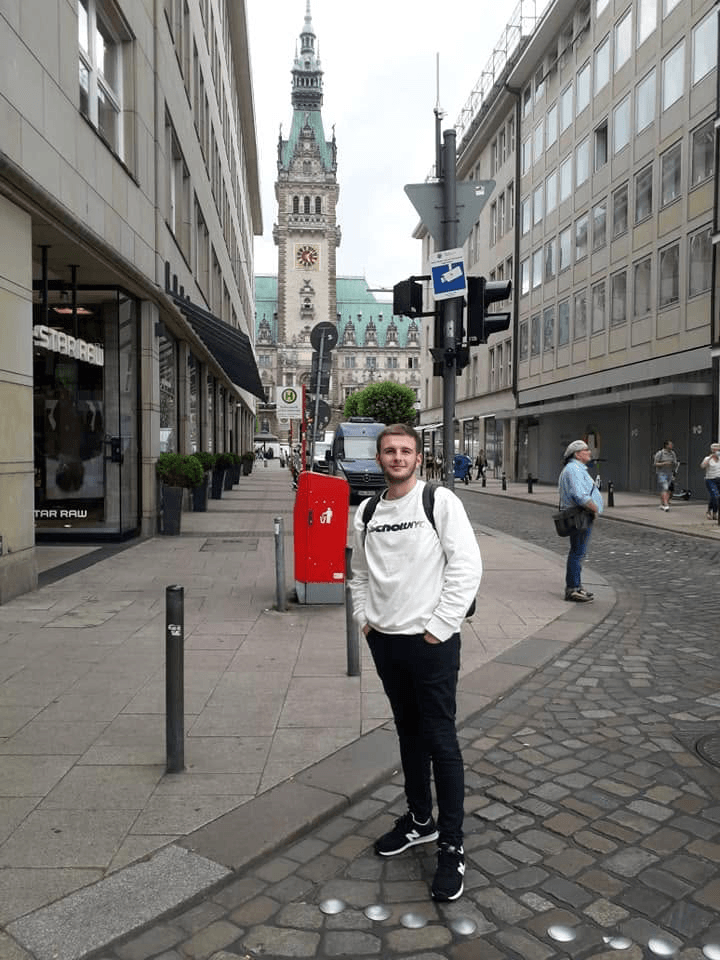
After finishing high school at Kiril Pejcinovik in Tetovo, I faced a question familiar to many young people in North Macedonia: stay and try to build a future at home, or leave and search for a better living elsewhere. I decided to test the second option. For three summer months, I worked in the kitchen of a restaurant in Germany.
There was nothing wrong with honest work, and the experience taught me discipline. But every day I thought about the future I had once imagined for myself and my family. I could not see that future in the path I was following. The discomfort became useful because it forced a decision. I returned to North Macedonia and enrolled in computer science at the Faculty of Contemporary Sciences and Technologies at South East European University.
That decision changed the direction of my life. SEEU gave me the environment in which technology, business, and ambition could finally meet. It also placed me inside a community known for producing capable programmers and entrepreneurs—people who could build in North Macedonia without limiting their work to North Macedonia.
Fourth place felt like failure—until it became fuel
During my first year, several friends and I travelled to Timișoara, Romania, for UNIHack. We finished in fourth place. On paper, that was a strong result for a young team. At the time, I did not experience it that way. I had entered with the intensity of someone who believed that effort should immediately become victory, and the result shook that belief.
In retrospect, the disappointment was valuable. Hackathons compress uncertainty: the idea is incomplete, time is short, the team is tired, and the result is public. They reveal how you respond when ambition meets reality. Timișoara taught me that setbacks do not automatically make ambition smaller. Handled correctly, they make it more precise.
Starting DrepoTech before feeling ready
While completing my bachelor studies, I launched DrepoTech with its first collaborators. We were not trying to become every kind of IT company. The ambition was focused: build strong websites and software, help businesses present themselves better, and combine technology with the content and social media work that many companies need but struggle to manage consistently.
The first days were full of energy and almost empty of external validation. We refined our work, spoke to businesses, explained what we could offer, and waited. When you are starting, silence can feel like a judgement. Every day without a client creates the same question: were we confident, or were we simply wrong?
The first yes arrived after 43 days
Forty-three days after launching the company, we won our first client. It was a straightforward website project, but emotionally it was much larger. After weeks of searching, it felt like finding water in the desert. I was still a student walking around campus, but for a moment I felt like the most successful person there.
We treated that first website with enormous care. It did not matter that it was not the biggest contract or the most complicated system. It mattered because someone had trusted us before the market had given them many reasons to. We put every bit of professionalism we had into the work. The project became proof—not that we had already succeeded, but that DrepoTech could be real.
The first client did more than pay for a website. That client changed the company from an idea we believed in into a responsibility we had to live up to.
What changed after the first project
The next stage was not one dramatic breakthrough. It was a long sequence of conversations, deliveries, corrections, lessons, and relationships. DrepoTech grew beyond that first website into a broader portfolio of work for businesses in different markets. Marketing also became an important supporting capability alongside the company’s programming work.
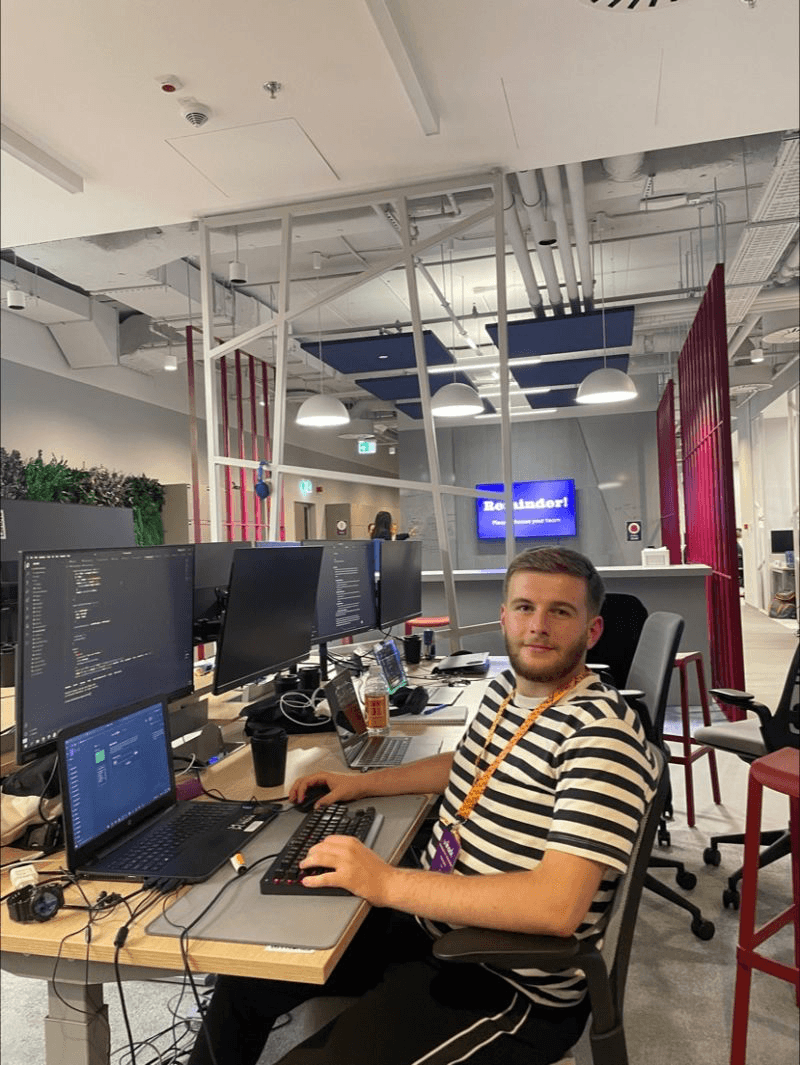
That combination now defines how we work. Web development, software development, marketing websites, and mobile applications give businesses the digital systems they need. Content management and social media management give those systems a consistent public voice. For many clients, separating technology from communication creates unnecessary friction. Bringing these disciplines together gives them one coordinated team with a more complete understanding of the business.
DrepoTech has grown into a multidisciplinary team spanning engineering, product, design, content, and social media. That range gives us the capacity to handle substantial engagements while keeping clear ownership of every workstream. We do not claim to provide every service in the technology industry. In the services we do provide, we want our confidence to be earned.
University remained a place to test ambitious ideas
Building a company did not replace education. It made education more practical. Questions about users, reliability, privacy, and implementation stopped being theoretical because I was seeing versions of them in real projects.
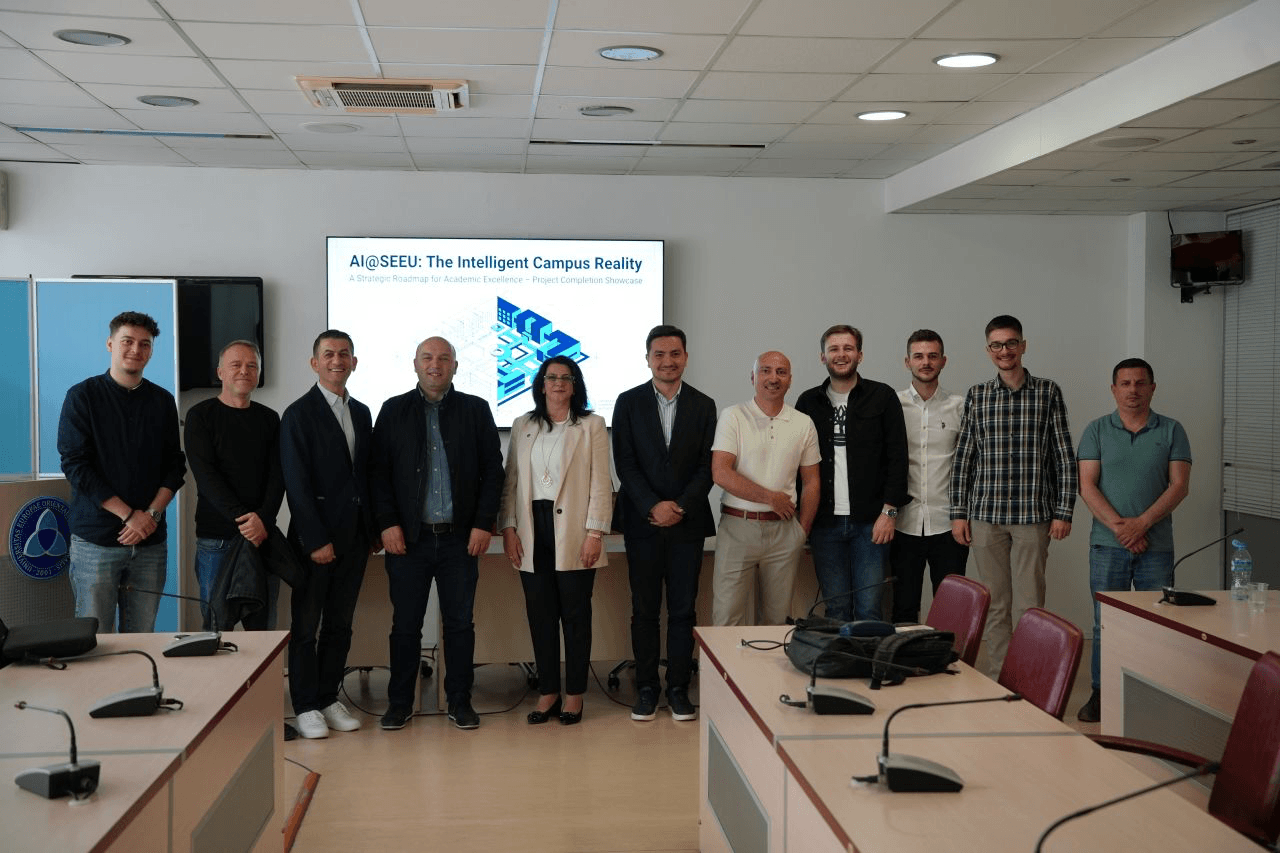
AI@SEEU was an opportunity to think about artificial intelligence at the scale of an institution. The work explored a public assistant for admissions and university information, personalized academic support for students, and research and administrative assistance for staff. The proposed architecture used retrieval-augmented generation so answers could be grounded in institutional information while keeping security and privacy in view.
The importance of the idea was not simply that it used AI. The challenge was to make AI useful for people with very different needs—future students looking for clear information, enrolled students navigating academic work, and staff handling research or administration. That is the difference between demonstrating technology and designing a system that belongs in a real environment.
GigaBin: taking agentic AI into a city problem
During my master studies, an international Erasmus Blended Intensive Programme brought students and universities together at Babeș-Bolyai University in Cluj-Napoca. Our group developed GigaBin, a Cluj-focused prototype for smarter waste collection.
The concept combined bin monitoring, fill-level prediction, urgency scoring, traffic-aware routing, truck assignment, and explanations that an operator could understand. Instead of treating AI as a single answer generator, the project explored multiple specialized roles working together around a practical decision: which bins should be collected, in what order, and why?
GigaBin was valuable because the problem was concrete. A city does not need an impressive diagram if the route is inefficient or the recommendation cannot be explained. The project pushed us to connect data, maps, prediction, operational constraints, and human decision-making in one experience. The interest it received from participants reinforced a lesson that continues to guide DrepoTech: technology becomes memorable when people can imagine using it tomorrow.
Returning to hackathons from the other side
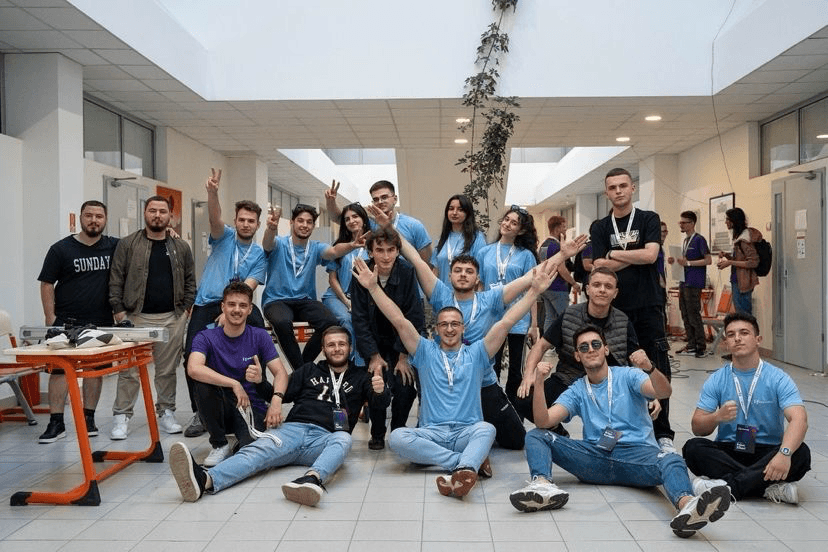
Years after Timișoara, I returned to the hackathon environment at SEEU Hack as a mentor. The role was different. I was no longer only defending my own idea or worrying about a final ranking. I was helping students move through the confusion that always appears between an exciting concept and a working demonstration.
Mentoring made the earlier experiences feel connected. The student disappointed by fourth place, the founder waiting 43 days for a first client, and the mentor encouraging a new team were not separate stories. Each stage changed the meaning of the one before it.
Still the same company—just more capable
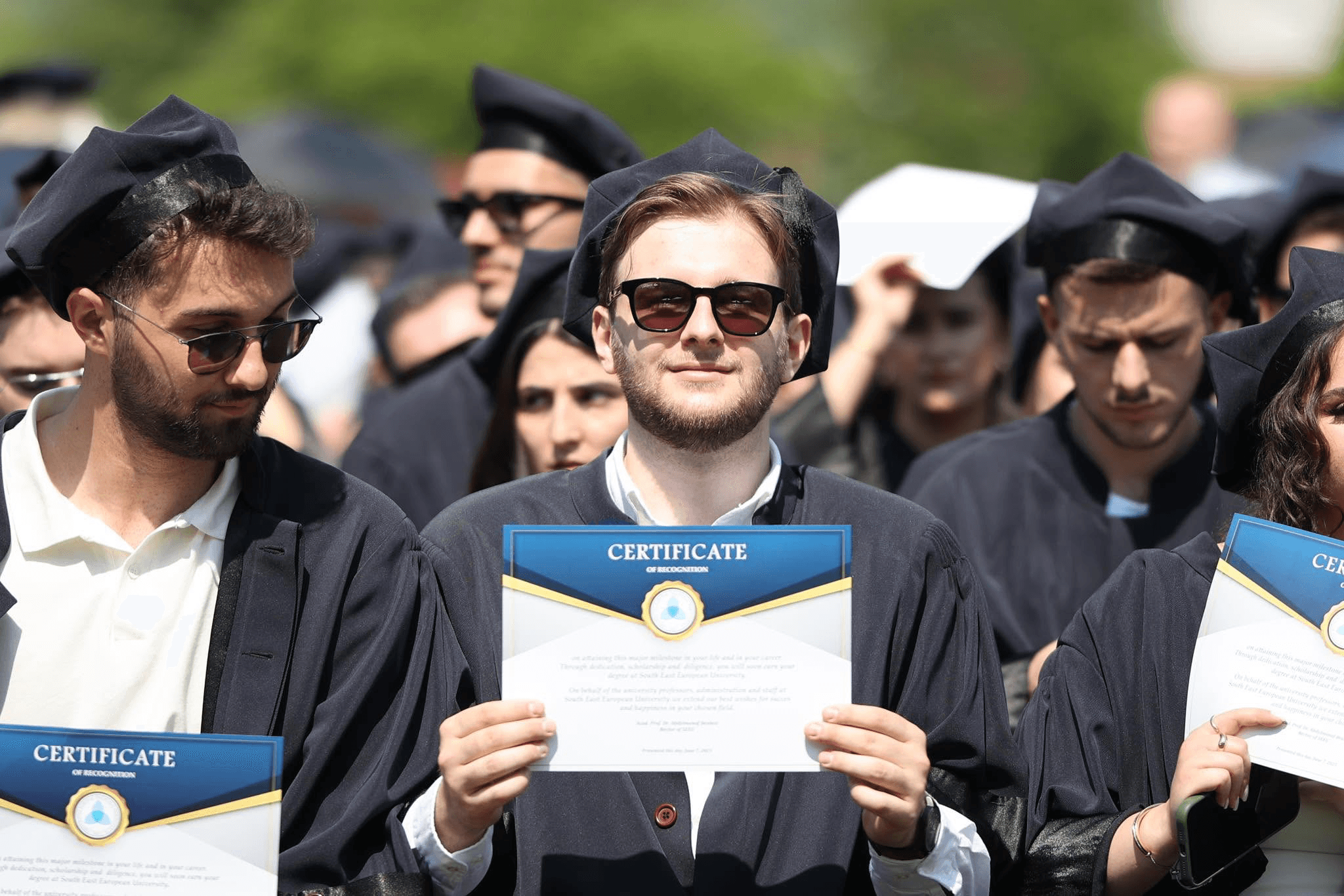
I completed my master studies, but I do not think of education as something that ended with a ceremony. The work keeps changing. Clients ask better questions. Technology creates new possibilities and new risks. A company that wants to remain useful has to keep learning without becoming distracted by every trend.
DrepoTech today has more experience, more structure, and a wider body of work than it did in 2024. But I want the company to protect something from its first 43 days: the hunger to earn trust, the attention given to a first opportunity, and the belief that serious work can be built in Tetovo and delivered to the world.
The goal is not to become the loudest company or to pretend we are larger than we are. The goal is to become exceptionally good at the work we choose: digital products, software, web experiences, mobile applications, content, and social media that help businesses move forward.
From SEEU to the world is not a slogan for us. It is the direction—and we are still near the beginning.